Online course · Foley Station Setup
Build your Foley station.
Record your own footsteps and impacts, ready to drop in, right from your home studio. The complete build, step by step: surfaces, microphones, signal chain and a fully configured DAW.
Taught by a Foley artist with AAA credits on Avatar: Frontiers of Pandora and Assassin's Creed.
€49one-time · 25 lessons + all downloads
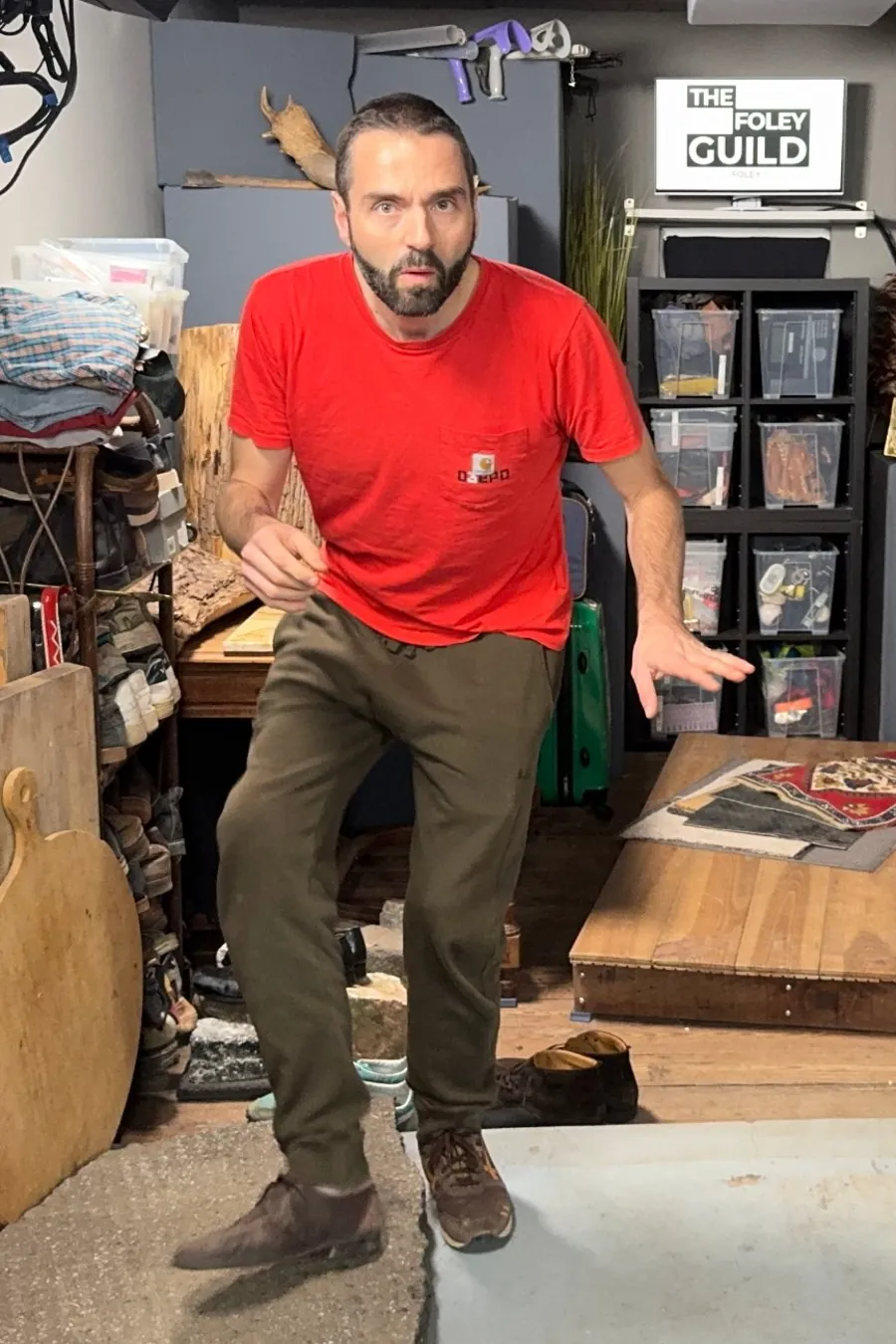
Bastian Gerner · Foley Artist
You know the feeling.
Everything comes out thin.
- "Everything I record has the room baked into it. You can hear it's my bedroom."
- "My noise floor eats the quiet stuff. Cloth movement? Forget it."
- "I'm walking on one square metre. The heel-toe never sounds right."
- "I only have my living room. Can I even record footsteps in here?"
Yes, you can.
You record sounds at home, but they come out miles away from what you had in your head. And the moment you think about footsteps or impacts, you give up before you even try, because recording those in a normal room feels basically impossible.
It isn't. That's exactly why it's worth building the surfaces and running them through a proper system. This course is built for that starting point.
Put your headphones on, record into the chain, and capture sounds that already sit the way you hear them in your head.
Wherever you're starting.
For anyone moving into Foley: changing careers, already at home in audio, or just getting started. You don't need a finished studio and you don't need a shelf full of gear.
Lots or next to none.
You walk out with a clear direction and a working system.
We start where you are.
Your room, your setup, your budget.
Not ready to build?
Start with Record It Right: clean recordings with a mic, a few props and the room you have.
I would never call myself a Foley artist, however Bastian's teaching kickstarted that path and he gives me the tools to confidently approach any scene I'm given and know how to get good sound. I HIGHLY suggest it to anyone who wants to improve their Foley game.
I'm really enjoying these lessons.
I'm gradually setting up my home studio by building acoustic panels … Thanks for all your advice; it's a huge help. Right now, I'm recording ambient sounds and a mock TV news broadcast for a theater production.
You make us want to do it ourselves.
No need to buy expensive gear, just be creative. You cover all the basics, and you show that it is fun and possible.
25 lessons. One system.
Each lesson short and to the point, taking you from surfaces on the floor to a working recording system.
- The Foley Surface Manuals
- A ready-to-use Pro Tools template
- A props list of the key items worth getting
- Reference sounds from my own recordings
Always know if it's good.
You get reference sound files from my own recordings. Every time you record something, you have a professional benchmark to check yourself against. No more guessing whether it's "good enough".
Pros use it too.
Bastian's course is the real deal. Even after 30 years in the video game industry and shipping 80 titles, his teaching helped me level up techniques I didn't know I was missing and reframe what I already do in fresh, exciting ways. He shows you how to capture great sound in real-world conditions, whether you've got a few condenser mics, dynamic mics, contact mics, or a blend, and how to experiment with mic placement, surfaces, and props to consistently get professional results. His depth of experience shines through in every lesson, making complex choices feel intuitive and immediately usable. I still follow Bastian because his guidance translates directly into better, more creative audio. No pristine studio required.
He gives us his insights into Foley and how to best utilize our brand-new Foley stage. Thank you again, Bastian, for your amazing insights.
Bastian's studio setup gives me a lot of new ideas about recording Foley and how to get better results. It's good to take some good advice from an experienced audio person like him.
Not theory. Real projects.
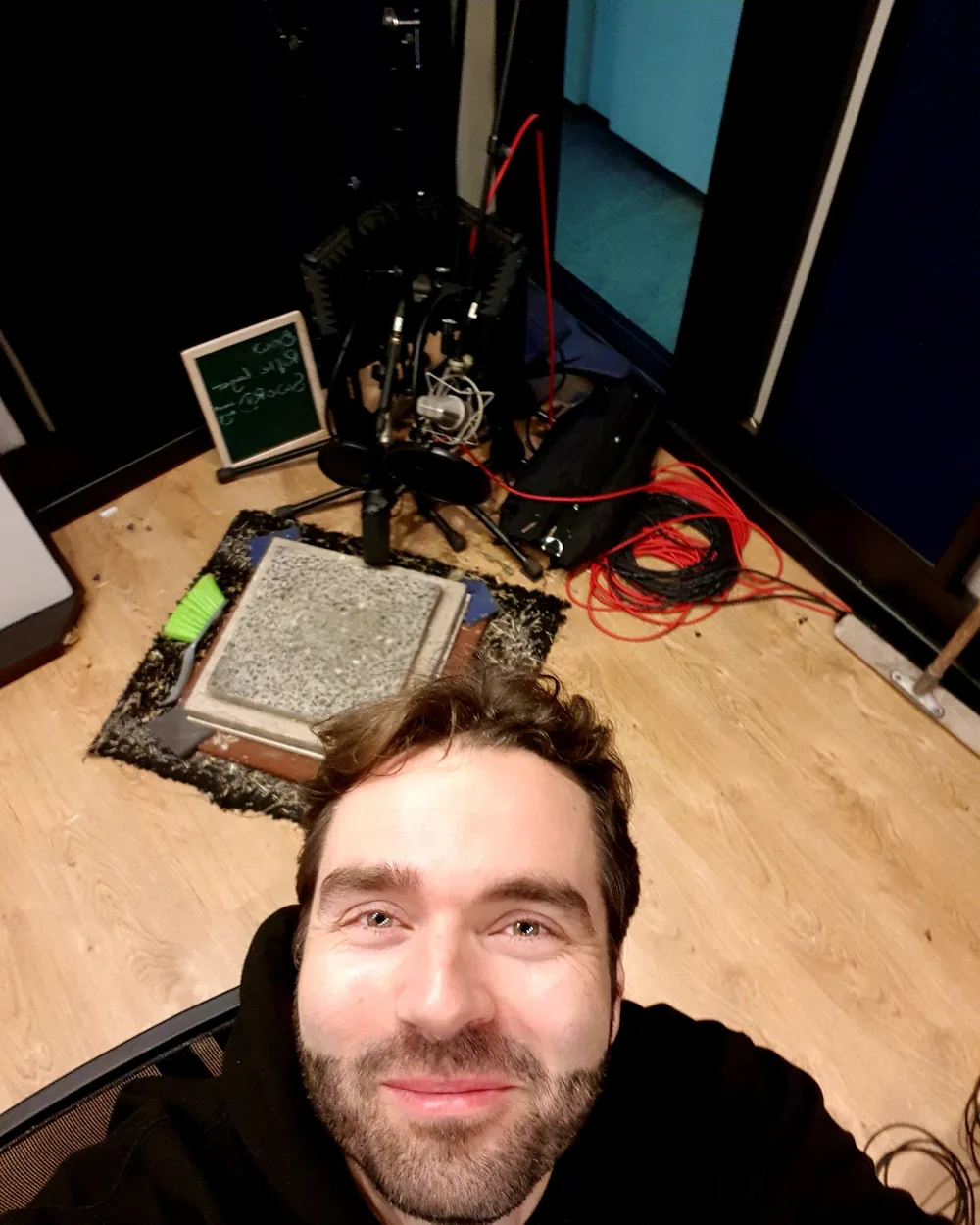
Bastian Gerner · at the Foley station
I came into sound from hip-hop and freestyle culture, not the conventional path. After years of interning I trained as a media designer for audiovisual media at BASIS Berlin, working on real productions from the start. Then fifteen years in the industry, learning on the job alongside mentors who were very good at what they did, and recording Foley for titles like Avatar: Frontiers of Pandora and Assassin's Creed.
So what I teach is how this is done on real projects, adapted to the room you already have: no perfect studio required, no permission needed. Wherever you start, you get one system and a clear path to follow.
 ↗
Before you ask.
How much do I need to spend to build the surfaces? +
Under €50 for a wood and a stone surface. That's the point: you don't buy your way into this.
What does my room need to have? +
Start where you are. The one thing that matters is that your walls aren't bare and every surface hard and smooth. If you don't have acoustic panels or absorbers, get creative with what's already in the room: furniture, blankets, anything that dampens. Then invest in your room acoustics over time, piece by piece.
Is there gear I absolutely need, or can I start with what I have? +
You can start with what you have. Even if that's the phone in your pocket. If you're buying one microphone, my recommendation at the low end is the SM7B. Almost everything else you can replace with things you already own.
How long until everything is up and running? +
You can build the surfaces over a weekend. Stay on it, and your setup will be dialed in within a week.
What if I get stuck or have questions? +
Join The Foley Guild. You get direct access to me there, and we meet once a month for a session with the crew.
Do you use AI to generate sound? +
No. Everything here is live, performed Foley. That's the whole point.
This is where it starts.
A working Foley station isn't the finish line. It's the thing that lets you record real deliverables, build a portfolio that isn't paper-thin, and finally have something to show the clients you've been looking for.
25 short lessons · Surface Manuals · Pro Tools template · props list · reference sounds